
You can claim JobSeeker Payment if you’re aged 22 to Age Pension age, live in Australia as a citizen or permanent resident, and meet income and assets tests. You’ll qualify if you’re unemployed and actively seeking work, or temporarily unable to work due to illness or injury affecting at least eight hours of weekly capacity. Are you unsure whether your situation fits these criteria? Check the details below to see how these rules apply to you.
TLDR
- Applicants must be aged 22 to Age Pension age and actively seeking work or temporarily unable to work due to sickness or injury.
- Australian citizenship or permanent residency is required, with at least two years of physical presence in most cases.
- Income under $300 per fortnight is fully exempt; payments taper to zero at $1,088.50 per fortnight.
- Assets must remain below $321,500 for single homeowners or $579,500 for non-homeowners to maintain eligibility.
- Mutual obligations include job searching, attending appointments, and reporting employment income every two weeks.
What Is JobSeeker Payment?

If you’re between 22 years old and Age Pension age and you’re looking for work—or you’re temporarily unable to work or study because of sickness or injury—JobSeeker Payment might be the financial support you need. You can also consider adjusting your work hours or applying for a reduced-hours arrangement to maintain benefits while managing other commitments (reduced hours eligibility).
This Centrelink payment arrives fortnightly, helping you stay afloat while you search for employment, improve your skills through training, or recover from short-term setbacks. Rates are updated twice yearly on 20 March and 20 September to ensure payment amounts reflect current economic conditions.
You’re not alone in this process, and this safety net exists so you can focus on building a stable future for yourself and those you care about.
The 3 Basic Eligibility Requirements
Before you can count on JobSeeker Payment to support you through tough times, you’ll need to meet three fundamental requirements that Centrelink uses to determine who qualifies for this assistance.
First, have you established Australian residency with at least two years of physical presence?
Second, do your income and assets fall below the specified thresholds?
Third, are you actively seeking employment, or have circumstances like reduced hours or temporary stand-down affected your work?
January hiring in Australia added 44,000 jobs, showing strong cross‑sector demand and improving prospects for applicants with skilled trades and other in-demand skills.
JobSeeker Payment Age Requirements: 22 to Pension Age

You must be between 22 and the Age Pension age to qualify for JobSeeker Payment, so where does that leave you if you’re unsure about your exact eligibility window?
Your upper age limit depends on when you were born, with those born on or after 1 January 1957 needing to be under 67, while earlier birthdates have slightly lower thresholds like 66.5 or 66.
If you’re approaching retirement age but haven’t reached your specific Age Pension age yet, you could still access JobSeeker as a bridge payment before moving over to the pension.
Maintaining a high participation rate is important for the labour market and can affect policy support for payments like JobSeeker.
Age Range Basics
Because managing Centrelink payments can feel overwhelming at first, understanding the basic age requirements for JobSeeker Payment is a solid place to start.
You must be at least 22 years old to qualify, and your eligibility continues until you reach Age Pension age.
Have you checked whether you fall within this working-age bracket? This range helps the payment supports adults seeking employment, retraining, or temporary relief during illness.
Pension Age Limit
Once you’ve turned 22 and are actively looking for work, you’re on track to access JobSeeker Payment support that can carry you right through to your late sixties—but do you know exactly when that support ends?
You must be under 67, Australia’s Age Pension age, to qualify for JobSeeker Payment. Once you reach 67, Centrelink shifts your assessment toward Age Pension eligibility instead, as JobSeeker Payment becomes unavailable regardless of your circumstances or continued willingness to work.
Residency Rules for JobSeeker Payment
The residency rules for JobSeeker Payment are where your eligibility journey begins, and they’re worth understanding clearly before you submit any paperwork.
You must live in Australia on your claim day, hold citizenship or permanent residency, and maintain residence to keep receiving support.
Are you a recent arrival? You may face a 2- or 4-year waiting period, though exemptions exist for certain visa holders.
Employers in Australia generally verify education with written consent, so providing proof of identity and residency documents may be requested during eligibility checks.
Two Ways to Qualify: Unemployed or Temporarily Unable to Work

You can qualify for JobSeeker Payment through two distinct pathways, depending on whether you’re actively seeking employment or temporarily unable to work due to illness or injury. If you’re unemployed, you’ll need to meet participation requirements like job searching and following an Employment Pathway Plan, but what happens if sickness strikes when you least expect it?
For short-term medical conditions, you can still access support by providing proper documentation, ensuring you don’t fall through the cracks during tough times. Apply early to beat APS delays and ensure your documentation and checks are in order to avoid gaps in support.
Unemployed Job Seekers
If you’re currently out of work or struggling to get enough hours, you’ll be glad to know that JobSeeker Payment offers two distinct pathways to qualify for financial support while you get back on your feet.
You qualify as unemployed if you’re not in full-time work, including part-time or casual situations, or if you’ve been temporarily stood down.
Even reduced hours can make you eligible, though your payment amount adjusts based on income.
You’ll need to actively seek employment and complete mutual obligation activities, which help you build skills while contributing to your community.
Short-Term Illness
Facing an unexpected illness or injury that knocks you out of work can feel overwhelming, but JobSeeker Payment offers a lifeline when you’re temporarily sidelined.
You can qualify if sickness stops your usual work or study, provided you submit medical evidence showing your condition affects at least 8 hours of weekly capacity.
Services Australia needs an approved certificate stating your diagnosis and incapacity period, so don’t delay your claim.
Eligibility Requirements
Although steering government payment systems can feel intimidating, understanding how you qualify for JobSeeker Payment doesn’t have to be complicated.
You can qualify if you’re unemployed and seeking work, or temporarily unable to work due to sickness or injury.
Both paths require you to meet age, residence, income, and assets tests, so you’ll want to check each requirement carefully before applying.
How Income and Assets Affect Your JobSeeker Payment
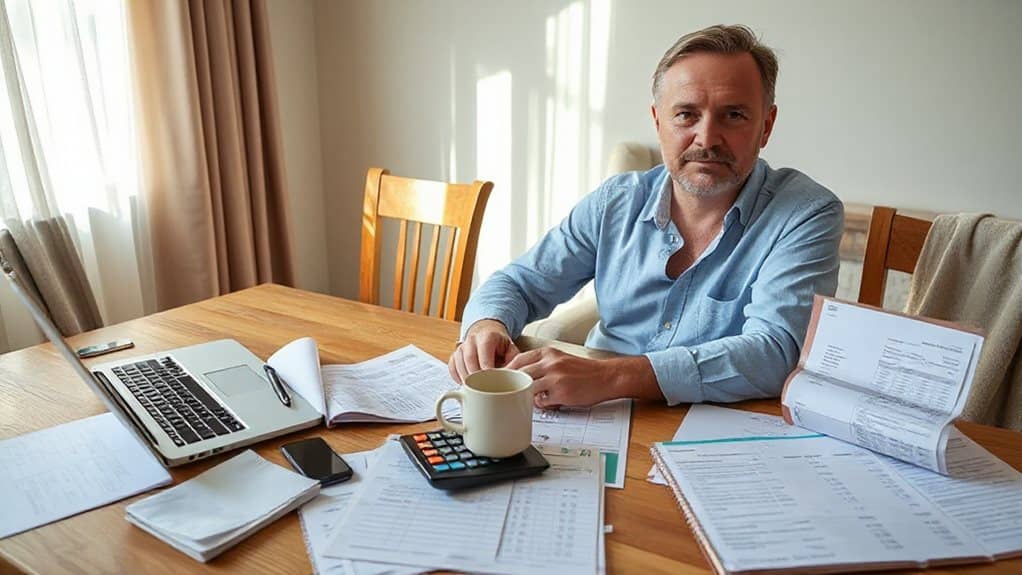
While you’re working toward your next opportunity, it’s natural to wonder how much you can earn before your JobSeeker Payment starts to change, isn’t it?
You can earn $300 per fortnight without any reduction, and your payment tapers down gradually until you reach $1,088.50, where it stops entirely.
Your partner’s income, investments, and even that rental property you own all count toward these limits, so you’ll want to track everything carefully.
Don’t forget the assets test either—your home is safe, but if you’re a single homeowner with more than $321,500 in other assets, or a non-homeowner with over $579,500, your payment will cease.
Cars, boats, business interests, and trust holdings all add up quickly, don’t they?
Stay informed, plan wisely, and you’ll keep supporting yourself while serving others through this transition.
JobSeeker Payment Waiting Periods Explained
If you’re applying for JobSeeker Payment, you’ll need to understand that several waiting periods could affect when your first payment actually arrives, won’t you?
You’ll face a standard one-week ordinary waiting period, though exemptions exist.
Liquid assets, income maintenance, and seasonal work preclusion periods may also apply, delaying payments from one to thirteen weeks depending on your circumstances, so you’ll want to prepare accordingly.
When Veterans and Visa Holders Can Claim JobSeeker
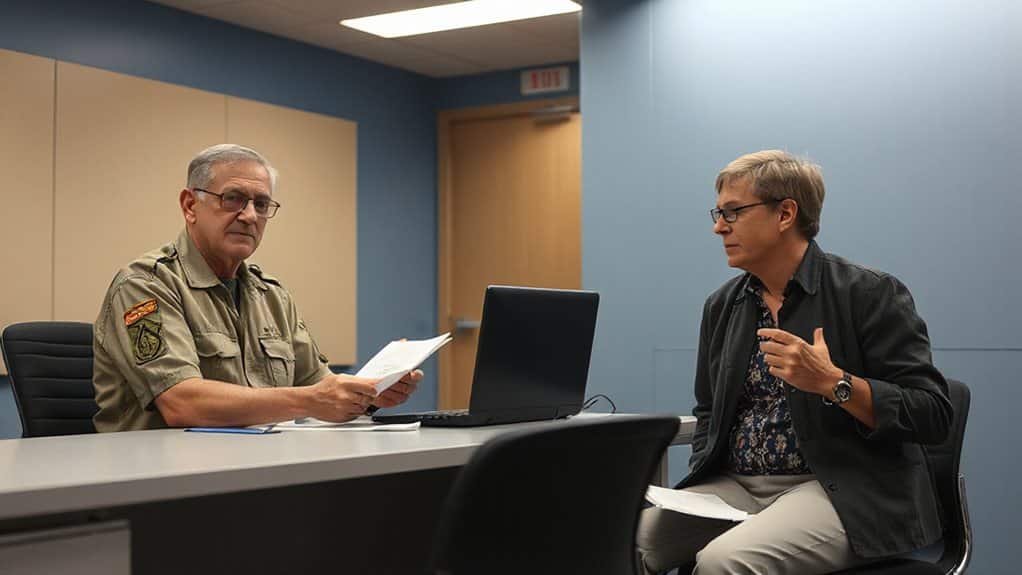
If you’re a veteran or visa holder wondering whether you can claim JobSeeker Payment, you’ll need to check how your specific circumstances affect your eligibility, since certain Department of Veterans’ Affairs payments and visa types can create barriers that standard applicants don’t face.
Your DVA payment might be classified as compensation or income support, and this distinction determines whether you can receive JobSeeker at all, while your visa category and length of Australian residence will be assessed against strict Centrelink rules.
Before you lodge any claim, have you confirmed exactly which payment type you’re receiving and whether your visa meets the residence requirements, as getting this wrong could lead to an automatic rejection?
DVA Payment Impact
Because you’re manoeuvring the intersection of veterans’ support and unemployment benefits, you’ll need to understand exactly how Department of Veterans’ Affairs payments interact with your JobSeeker eligibility—getting this wrong could mean missing out on income you’re entitled to, or facing an unexpected payment suspension down the track.
Some DVA payments exclude you from JobSeeker entirely, so check Payment Finder before claiming.
Visa Holder Rules
Whether you’re a veteran shifting civilian life or someone building a new future in Australia, your visa status determines if you can access JobSeeker Payment when you need it most.
Are you a citizen or permanent resident? You’ll generally qualify, though new arrivals face waiting periods.
New Zealanders need ten years’ residence, while temporary and protection visa holders usually can’t claim, though Special Benefit may help.
Your Job Plan: Activities and Reporting Requirements
Although keeping up with reporting and activity requirements might feel overwhelming at first, you’ll find that understanding your Job Plan and its associated obligations is essential for maintaining your JobSeeker Payment without interruption.
You must report employment income every two weeks, even when it’s zero, and complete your mutual obligations like job searching and appointments.
Have you checked your points target and task list lately?
How to Claim JobSeeker Payment: Documents and Steps

If you’re ready to apply for financial support while you look for work, you’ll find that claiming JobSeeker Payment online is straightforward once you know the steps, and you can start the process from home without needing to queue at a service centre.
You’ll need a myGov account linked to Centrelink, your CRN, and identity documents like your driver’s licence.
Have your income details, bank information, and employment records ready, won’t you?
You can upload documents online and track your claim’s progress, so why wait when help is available?
Keeping Your Payment: What Changes to Report
Staying on top of your JobSeeker Payment means keeping Centrelink in the loop about changes that could affect your eligibility or payment amount, doesn’t it?
You must report employment changes, income fluctuations, asset increases over set thresholds, and living situation updates within 14 days.
Don’t forget fortnightly reporting with $0 income details too, or your payment could stop.
And Finally
Now that you’ve examined the JobSeeker Payment eligibility requirements, you’re better equipped to determine whether this support suits your circumstances, aren’t you? Remember, meeting the age, residency, and activity conditions isn’t just about ticking boxes—it’s about accessing genuine assistance when you need it most. Gather your documents, start your claim through myGov, and don’t hesitate to reach out to Centrelink if questions arise. You’ve got this, and help is available.