
JobSeeker Payment supports you if you’re unemployed and actively seeking work between ages 22 and 67. You’ll receive around $808.80 fortnightly if you’re single without children, though rates vary based on your circumstances. You can earn up to $150 each fortnight before your payment reduces, and you’ll need to report income every two weeks through myGov to keep payments flowing. Meeting mutual obligations like job searching remains essential for eligibility, so staying organized helps you maintain this crucial support. What specific aspects would help you guide this system more confidently?
TLDR
- JobSeeker Payment provides fortnightly income support for unemployed Australians aged 22–67 actively seeking work.
- Maximum rates range from approximately $715 to $1,047 per fortnight depending on individual circumstances and caring responsibilities.
- Payments reduce gradually as you earn, with $150 income-free area before 50–60 cent reductions apply.
- Recipients must report gross employment income every two weeks to maintain eligibility and avoid payment stoppages.
- Indexation occurs on 20 March and 20 September to keep payments aligned with cost of living changes.
Who Qualifies for JobSeeker Payment in 2026?

Although maneuvering government support can feel overwhelming at first, understanding whether you qualify for JobSeeker Payment in 2026 is actually more straightforward than you might expect.
You must be between 22 and 67 years old, unemployed and actively seeking work, and an Australian resident when you apply.
Your income and assets will be assessed, and you’ll need to meet mutual obligation requirements, including job searching and attending appointments, to maintain your eligibility. Employers also often use selection criteria to compare applicants for advertised positions.
Payment rates are updated twice yearly to help keep pace with cost of living changes, with adjustments made on 20 March and 20 September each year.
How Much Is JobSeeker Payment in 2026?
You need to know exactly what you’ll receive and how your earnings affect it, so let’s break down the maximum amounts you can expect in 2026.
Your payment depends on your situation—if you’re single without children, you’re looking at around $781.10 per fortnight, though some recent reports place it closer to $808.80 after March indexation, while single parents and those with partial work capacity receive about $836.50, and partnered individuals get roughly $715.10.
But here’s what really matters: how much you can earn before these payments start reducing, because understanding those income thresholds will help you plan your job search without accidentally cutting off your support.
For those aiming to maximise job prospects, investing in a tailored, ATS-optimized resume can substantially increase interview chances and long-term earnings.
Maximum Payment Amounts
At the heart of planning your finances while unemployed, knowing exactly how much support you can expect from JobSeeker Payment in 2026 makes all the difference, doesn’t it?
You’ll receive up to $808.70 fortnightly if you’re single without children, or $740.30 if partnered.
Do you have children, care for adoptive children, or face limited work capacity?
Your rate could rise to $866.00, or even $1,047.30 as a principal carer with exemptions.
Income Threshold Impact
Now that you’ve got a handle on the maximum amounts you could receive, it’s worth understanding how your earnings affect what actually lands in your account each fortnight.
You can earn $150 before any reductions kick in, but between $150 and $256, you’ll lose 50 cents per dollar, and above $256, that jumps to 60 cents—so how much will you really take home?
How Much Can You Earn on JobSeeker Payment?
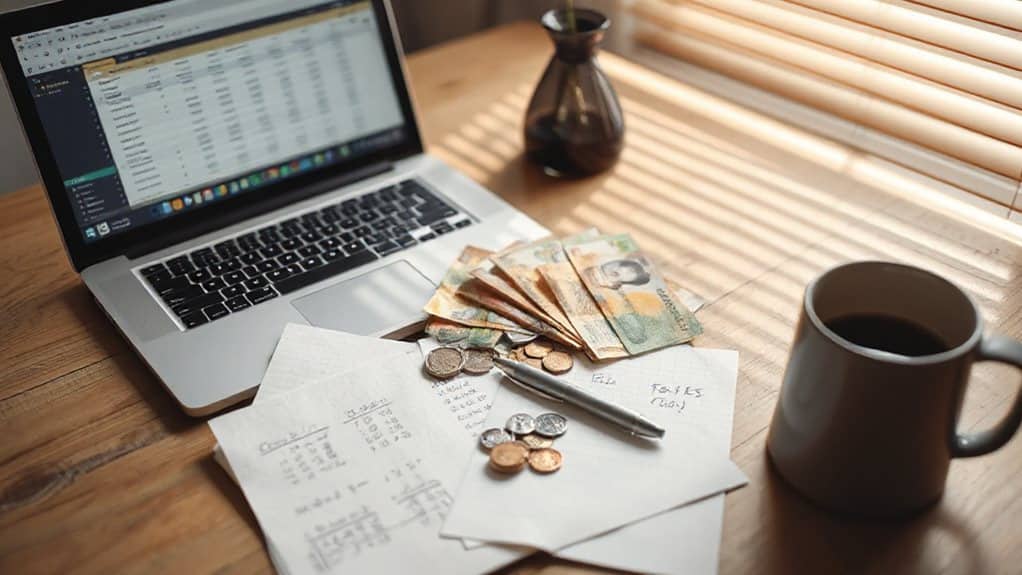
Understanding how much you can earn while receiving JobSeeker Payment helps you plan your finances with confidence, doesn’t it?
You can earn up to $150 each fortnight before your payment reduces, and even then, you keep receiving partial support until you hit the cut-off—around $1,431 for most singles, or higher if you’re caring for children.
Every dollar you earn builds your independence, so why not research what’s possible?
For more detailed guidance, consider tailoring your approach to the most recent 10–15 years of your employment history to highlight relevant work for benefit and resume purposes.
Working Part-Time on JobSeeker: What Changes?
When you’re working part-time while receiving JobSeeker Payment, you’ll need to report your income every fortnight so Centrelink can adjust your payment accordingly, but do you know exactly how much you can earn before your payment starts to reduce?
Your JobSeeker amount decreases based on how much you bring home, and once your earnings cross certain thresholds, your payment could stop entirely—though you’ll keep any income you’ve already received.
Understanding these income reporting rules, payment reduction rates, and employment threshold limits helps you plan your work hours wisely and avoid unexpected surprises in your budget. A clear approval process and tracking expectations, including a possible 90-day trial and day-by-day logging, can help you and your employer align on remote work arrangements.
Income Reporting Rules
Although the thought of juggling part-time work with Centrelink reporting might feel overwhelming at first, you’ll find that understanding the income reporting rules actually gives you more control over your JobSeeker payments.
You must report your gross employment income every two weeks, even when you’ve earned nothing, using your payslips as your guide.
Have you considered how tracking your partner’s income alongside yours might strengthen your household’s financial stability?
Late reporting delays your payments, while consistent, accurate submissions keep your support flowing smoothly as you build your working life.
Payment Reduction Rates
Because you’re considering part-time work while receiving JobSeeker support, you’ll need to know exactly how your earnings will affect your fortnightly payments, and the good news is that the system is designed to reward your efforts rather than punish them.
You keep the first $150 you earn each fortnight completely free, so your payment won’t drop at all.
After that, you’ll lose just 50 cents per dollar until you hit $256, then 60 cents beyond that—meaning you always come out ahead by working, don’t you?
If you earn $300, for example, your payment only falls by roughly $80, leaving you with more total income than if you’d stayed home.
This structure helps you build skills, serve your community through work, and still receive support as you move toward full employment.
Employment Threshold Limits
You’ve seen how your JobSeeker payment adjusts as you pick up part-time work, but now you’re probably wondering where the actual limits sit—how much can you really work before things change substantially for your eligibility and obligations?
You can keep receiving JobSeeker while working part-time because eligibility hinges on income, not hours alone.
You’ll still report earnings each fortnight, and your payment reduces gradually as income rises.
If you’re assessed with partial capacity to work, meeting 15 hours weekly can satisfy your mutual obligations.
Regular employment shifts your focus from job searching to income reporting, helping you balance serving others while maintaining support.
How to Keep Your JobSeeker Payment: Reporting Rules
When you’re receiving JobSeeker Payment, staying on top of your reporting responsibilities isn’t just a suggestion—it’s the foundation that keeps your financial support flowing without interruption.
You must report your and your partner’s gross employment income every two weeks, even when it’s zero, and continue meeting your mutual obligations through your Job Plan.
Miss a deadline, and your payment stops—so mark those dates, check your details, and keep communicating with Services Australia to serve your community without financial stress.
Always get written permission before sharing referee details to comply with Australian privacy laws.
How to Apply for JobSeeker Payment Through MyGov

Now that you understand what’s needed to keep your JobSeeker Payment flowing smoothly, let’s look at how you’ll get that support in the first place—starting with your online application through myGov.
First, you’ll create your myGov account with a verified email address, then link Centrelink to access the claim pathway.
You’ll select “Make a claim,” choose JobSeeker Payment, and follow the prompts.
Have your supporting documents ready, as Services Australia needs these to assess your situation and process your application efficiently.
What Happens If You Don’t Report JobSeeker Income?
Although it might seem like just another task on your to-do list, reporting your JobSeeker income every two weeks is something you really can’t afford to overlook, can you?
If you don’t report, your payment stops immediately, and you’ll face delays rather than automatic back-pay.
Late reports beyond 13 days require phone contact, while repeated failures risk ongoing support and potential debt.
And Finally
You’ve now got a solid grasp of how JobSeeker works in 2026, from eligibility rules to reporting requirements, and you can see that staying on top of your obligations keeps your payments flowing smoothly while you search for work. Whether you’re starting your claim through myGov or figuring out part-time income limits, you’re equipped to make informed choices, so take that next step with confidence—your financial support is there to help you get back on your feet, isn’t it?

Emma Anderson is a professional executive resume and creative writer. She founded JobFrog Resumes in 2015 after leaving full-time work to raise her first child, combining her two passions: working from home with her family, and helping people put their best selves forward on paper. Emma has personally written every JobFrog resume since — no outsourcing, no templates — and stands behind the Jobfrog Rewrite Guarantee.