
When you apply for a job in Australia, your background check typically reveals your criminal history including convictions, pending charges, and court outcomes, while spent convictions and dropped charges stay hidden. Employers will verify your work history by contacting previous bosses to confirm dates and roles, and they’ll check your education credentials directly with schools. Your right-to-work status gets confirmed through official systems, and depending on the position, you might face credit checks for finance roles or medical and drug screenings for safety-critical jobs like mining or transport. Want to know exactly how each piece gets checked, and how you can prepare?
TLDR
- Australian police checks reveal convictions, pending charges, and disclosable court outcomes including findings of guilt without conviction.
- Employment verification confirms factual details like positions and dates, while reference checks gather qualitative manager feedback.
- Education verification involves contacting institutions directly and using tools like My eQuals to confirm degrees and enrollment history.
- Right-to-work checks via VEVO or DVS verify visa status, typically bundled with police checks for comprehensive screening.
- Industry-specific health screenings include drug tests, spirometry, and vision assessments to match worker capabilities with job hazards.
What Shows Up on Australian Police Checks (and What Doesn’t)

So, you’re wondering what actually appears when an employer runs a police check on you in Australia? You’ll see charges proven in court, convictions, sentences, and pending matters, but spent convictions, dropped charges, and minor traffic fines won’t appear. Disclosable Court Outcomes also include findings of guilt by a court even if no conviction was recorded, as well as good behaviour bonds and similar court orders. Always get written permission from referees before sharing their details to ensure compliance with Australian privacy laws.
How Australian Employers Verify Your Work History
You’ll notice that Australian employers don’t simply take your word for your career history, so how do they actually confirm where you’ve worked and what you’ve accomplished? They rely on two distinct but complementary approaches: employment verification methods that confirm the hard facts of your positions, dates, and responsibilities through direct contact with your previous employers, and reference check processes that gather richer, qualitative observations about your performance and workplace conduct from people who’ve actually managed or collaborated with you.
Understanding how these systems operate, what legal protections like the Privacy Act 1988 require of them, and what timeframe you can typically expect—often around five business days—will help you prepare documentation and anticipate exactly what potential employers will learn about your professional past. A strong, well-presented resume that is ATS-optimised and achievement-driven can significantly improve the chances that employers will notice the verified record and invite you to interview.
Employment Verification Methods
When you’re applying for a new job in Australia, your prospective employer will likely want to confirm that the work history you’ve presented is accurate and truthful, which is why understanding how employment verification actually works can help you feel more prepared and confident throughout the hiring process. Employers contact your previous workplaces directly, verifying your job titles, employment dates, responsibilities, and rehire eligibility. They’ll need your written consent first, and they’ll check your identity using documents like your passport or driver’s license. Third-party providers like HireRight, Veremark, and Sterling often handle these checks efficiently, completing most verifications within five business days across Australia and over 180 countries worldwide.
Reference Check Process
How exactly do Australian employers confirm that your work history matches what you’ve put on paper? You’ll need to sign a consent form first, protecting both you and the organization under Australian privacy laws. Once you’ve given permission, you’ll provide two or three professional referees—ideally recent supervisors who can speak to your performance.
Employers then prepare targeted, open-ended questions about your reliability, leadership, and how you handle pressure, while carefully avoiding anything discriminatory. They’ll verify your employment dates, achievements, and skills against your resume, checking for red flags like absenteeism or inconsistencies.
Throughout this process, you’re treated fairly through standardized templates and trained hiring managers who respect confidentiality and cross-state time zones.
How Education Verification Works for Australian Background Checks
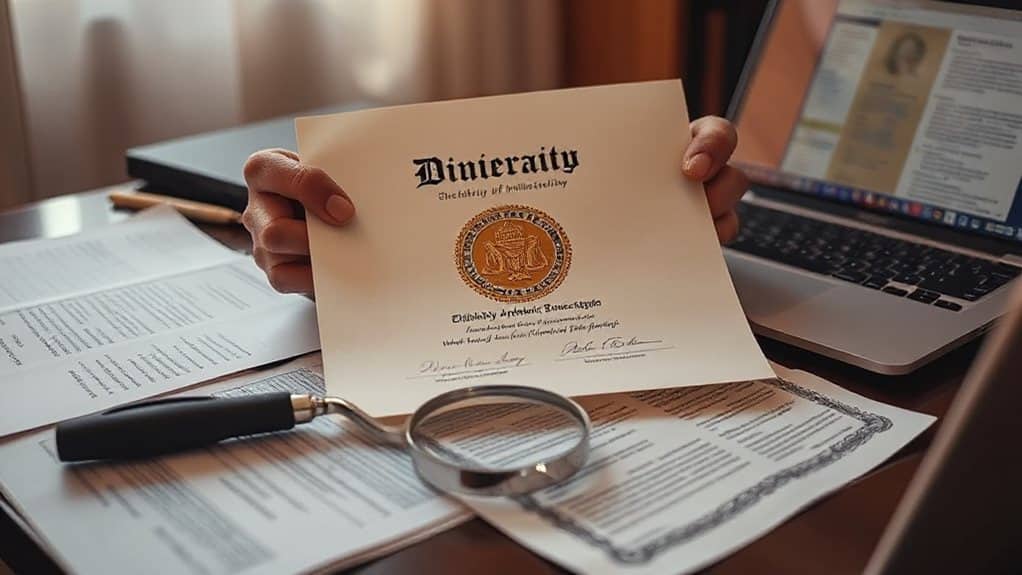
Why do employers place such weight on your academic credentials, and what steps ensure those qualifications hold up under scrutiny?
You’ll gather photocopies of your degrees, transcripts, and certificates, then employers check if your institution holds proper accreditation in Australia or overseas. They’ll contact your schools directly to confirm enrollment dates, graduation, and grades, using tools like My eQuals for faster results. Keep your feelings about the job private or share only with family and close friends to protect your professional reputation and avoid unnecessary complications Keep Your Thoughts.
Which Jobs Require Credit and Financial Checks
You’ll encounter credit and financial checks most frequently when applying for finance sector roles, senior management positions, and cash handling jobs, as these positions place you in direct contact with sensitive monetary decisions or significant fund access.
If you’re pursuing a career in banking, insurance, or government financial management, you should expect these screenings to form a standard part of your hiring process, given the inherent risks involved.
Are you prepared to demonstrate your financial responsibility when these checks reveal your credit history, outstanding debts, and past financial behavior to potential employers?
Recruiters often make rapid initial judgments, so placing key qualifications and relevant keywords near the top of your application can improve visibility and chances of progressing.
Finance Sector Roles
When you’re pursuing a career in Australia’s finance sector, you’ll quickly uncover that credit and financial checks aren’t just occasional requirements—they’re woven into the fabric of employment screening across numerous roles.
You’ll find tellers, lenders, compliance officers, and managers all face credit assessments, while ASIC-licensed advisers and brokers undergo rigorous financial background screening to meet professional standards and protect those they serve.
Senior Management Positions
How far do you think a credit check can reach in your professional path? If you’re stepping into senior management, you’ll find these checks extend further than you might expect. When you lead teams handling client funds, insurers, or financial services, your credit history becomes part of your professional reputation. You’re not just managing money; you’re demonstrating trustworthiness that others can rely on.
Cash Handling Jobs
Where exactly does your career path cross into territory that demands financial scrutiny?
If you’re pursuing cash handling roles—bank teller, cashier, or retail supervisor positions—you’ll likely face credit and financial background checks.
Employers need assurance you can manage money responsibly without temptation.
Your financial history demonstrates trustworthiness, showing you’re someone who serves others with integrity when entrusted with their funds.
How Right-to-Work Checks Fit Into Australian Background Screening
Why do right-to-work checks matter so much in Australia’s hiring environment, and where exactly do they slot into your broader background screening process?
You’re legally required to verify work rights before anyone starts, using VEVO for visa holders or DVS for citizens, and you’ll typically bundle this with police checks. Platforms like Dayforce track your RTW status, ensuring you’re protecting both your organization and every person you employ. Follow-up communication after checks is important to maintain clarity and respect the timelines discussed, so make sure to document results and next steps in a timely manner to support hiring decisions and compliance with legal timelines.
When Medical and Drug Screening Is Required in Australia

When exactly do you need to roll up your sleeve for a medical or drug test during your Australian job search, and which industries make this a non-negotiable step?
Mining, construction, logistics, and manufacturing employers require pre-employment health screenings, including drug and alcohol tests, to match your capabilities with job hazards. Transport roles enforce screening under chain-of-responsibility rules, while heavy machinery or driving positions demand vision, hearing, and drug tests for safety compliance. Dusty or chemical-exposed environments require spirometry alongside drug screening for respiratory protection.
How to Prepare for Your Australian Background Check
Knowing when you’ll face medical or drug screening is only part of the equation, so let’s turn our attention to what you can actually do to get ready for the background check itself.
You’ll gather your passport or driver’s license for identity verification, obtain written consent documents outlining specific checks, and contact previous employers to confirm your employment history details are accurate.
And Finally
You’ve now got a solid grasp of what Australian employers might uncover during your background check, from police records and work history to education and right-to-work verification. While the process can feel daunting, you’re well-equipped to handle it with confidence, aren’t you? By gathering your documents early, understanding which checks apply to your specific role, and addressing any potential issues honestly, you’ll move through screening smoothly. Your preparation today sets you up for success tomorrow, so take that next step toward your new opportunity with assurance.

Emma Anderson is a professional executive resume and creative writer. She founded JobFrog Resumes in 2015 after leaving full-time work to raise her first child, combining her two passions: working from home with her family, and helping people put their best selves forward on paper. Emma has personally written every JobFrog resume since — no outsourcing, no templates — and stands behind the Jobfrog Rewrite Guarantee.