
You should never include your date of birth on your resume, since you aren’t legally required to share it and doing so only invites age discrimination that can derail your chances before you even get an interview. Research shows that older candidates with identical qualifications receive far fewer callbacks than younger applicants, so why hand employers a tool they can use against you? Instead, focus on your skills, achievements, and what you bring to the table right now. Recruiters already estimate age from your graduation dates and experience timeline, so there’s no benefit to volunteering this information upfront. Protect your opportunities by keeping personal details off your resume, and you’ll discover even more strategies to keep age bias from limiting your career.
TLDR
- No legal requirement exists to include your date of birth on any resume.
- Adding it risks age discrimination, which research shows begins as early as age 38-40.
- Recruiters already estimate age from experience years and graduation dates.
- Focus instead on skills, qualifications, and recent achievements in your top third.
- Remove graduation dates and limit work history to 10-15 years when possible.
Should You Put Your Date of Birth on Your Resume? (No: Here’s Why)

Why would you give employers information they don’t need and could use against you?
You don’t legally have to include your date of birth, and doing so opens you to age discrimination that research shows affects up to 50% of older candidates. Correspondence audit studies demonstrate that older applicants consistently receive lower callbacks than younger counterparts with identical qualifications, with 38-year-olds facing disadvantages compared to 24- and 28-year-olds, and 54-year-olds less likely to be hired than 42- or 48-year-olds. Tertiary education often helps candidates demonstrate ongoing skill development and relevance regardless of age.
Protect your privacy, focus on your skills, and let your qualifications speak for themselves instead of inviting bias.
When Age Discrimination Actually Starts: What Research Reveals
You might think age discrimination only affects workers nearing retirement, but research shows the 26-54 gap reveals a hidden penalty that starts much earlier than you’d expect. While the law protects workers 40 and older, studies indicate the median age for first experiencing age discrimination is just 45 years old—barely above the median U.S. workforce age of 42—meaning you’re potentially facing bias costs decades before you planned. If 47% of workers over 40 already report experiencing discrimination, and 2 in 3 have witnessed or experienced it firsthand, shouldn’t you understand exactly when and how these penalties begin before deciding what personal details to share on your resume? Our services include tailored advice for sector-specific resumes, including the Australian Media and Communications sectors.
The 26-54 Gap
When exactly does age discrimination begin creeping into your career, and how much earlier than you expected might it actually start? Research shows you’re not safe in your twenties—by age 40, hiring discrimination already takes hold, intensifying as you approach retirement.
Women face sharper barriers, and even mid-career professionals report worsening treatment.
Your date of birth signals more than you’d imagine.
Hidden Penalty Costs
How much does age discrimination actually cost you before you even realize it’s happening? You might think it starts in your 50s, but 16% of unemployed workers already perceive bias in their 40s, compared to just 10% of employed workers. By the time you notice, you’ve likely faced months of rejected applications, diminished confidence, and stalled career momentum that quietly compounds.
Bias Starts Early
At what point does your age quietly become a liability in the eyes of employers? Research shows discrimination begins at 40, not later in life as many assume.
If you’re a woman, you face even earlier disadvantages, with amplified effects across all fields. Your callback rates drop progressively each decade, making your 40s the critical threshold where bias takes hold.
How Recruiters Use Age Information Against You
Why should you worry about putting your date of birth on your resume? Recruiters actively use age signals against you, with 82% gauging age from experience years and 79% from graduation dates. They admit 38% consider age while reviewing, and discrimination starts as early as 40. Your dates trigger hidden bias that blocks callbacks, interviews, and fair salary offers you deserve. Place key qualifications and keywords in the top third of your resume to reduce quick age-based screening and improve initial relevance for both recruiters and ATS by highlighting top-third visibility.
When Your Age Actually Helps Your Candidacy

While age discrimination is a real concern, you shouldn’t assume your years of experience will always work against you. In certain industries and leadership positions, your maturity and track record can actually set you apart from younger competitors.
Are you targeting senior roles or fields where seasoned judgment is valued? Recruiters often spend only seconds on an initial scan, so place those career highlights where they’ll be seen quickly, such as in a top-left summary with experience-focused keywords.
Industry-Specific Advantages
Where exactly does your age become an asset rather than a liability on your resume? In academia, your date of birth signals maturity that committees trust for research leadership.
Healthcare employers value your decades of clinical wisdom when caring for vulnerable patients.
Government, legal, and education sectors reward your experience depth, too.
When you serve others, your age often speaks louder than words.
Senior Leadership Roles
You’ve seen how certain industries quietly welcome the credibility that comes with years on the job, but let’s look at where age stops being something you hide and starts being something you lead with.
When you step into senior leadership roles, your experience signals reliability others can count on.
Workers 65-plus are the fastest-growing labor force segment, representing over 60% of projected growth through 2030.
Your decades of guiding teams through challenges become assets you can harness to serve others more effectively.
While 40% of older tech workers view age as a liability, your expertise often outweighs bias in positions where strategic wisdom matters most.
Other Age Signals to Delete: Graduation Dates and Early Jobs
Why would you broadcast your age before you’ve even landed the interview? You can protect yourself from bias by removing graduation dates, especially if you’re over ten years in your career, since your accomplishments speak louder than old timelines. If you’re newer, you’ll want to keep that year to show you’re building fresh, relevant skills employers need right now. Ensure your resume also includes complete employment dates and verifiable referee contact details to meet government application expectations.
What Gen Z vs. Boomer Managers Notice on Resumes
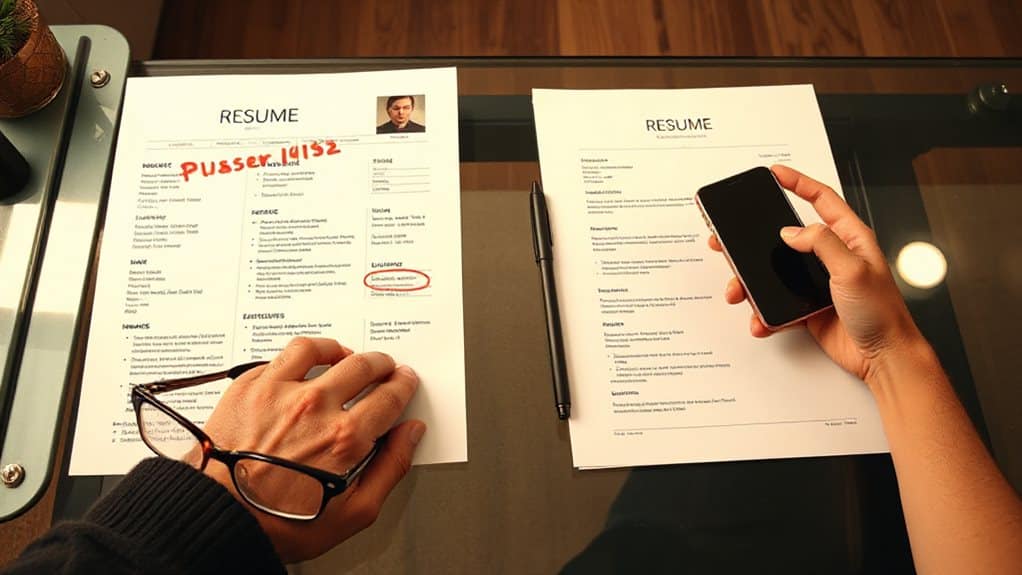
How differently might your resume land depending on who’s reading it? Research on generational hiring preferences remains limited, so you can’t assume a Gen Z manager will overlook your age while a Boomer manager scrutinizes it. Instead of guessing who reviews your application, focus on presenting skills that serve employers across generations. Your experience deserves attention for its value, not your birth year.
Forced to Reveal Your Age? Three Tactics That Protect You
Where exactly does your age show up on paper, even when you’re trying to keep it hidden? You might unknowingly reveal it through graduation dates, outdated email domains like AOL or Yahoo, or phrases like “seasoned professional.” Remove these markers entirely. Replace them with modern Gmail addresses, skills-focused language, and recent formatting. You’re not hiding—you’re highlighting what truly matters to employers seeking your unique capabilities.
Where Employers Legally Require Your Date of Birth

When might you actually need to share your date of birth with a potential employer, even though you’ve worked hard to keep it off your resume? You’ll encounter legal requirements when applying for roles with minimum age thresholds, like serving alcohol or operating heavy machinery, where employers must verify you’re old enough to work safely and legally.
Background checks also demand your date of birth, since screening services use it to pull accurate criminal, financial, and commercial records without confusing you with someone else.
Pre-employment paperwork frequently includes this information for eligibility verification purposes, and while these requests feel invasive, they’re often mandated by law rather than discrimination.
Understanding these legitimate requirements helps you navigate when disclosure serves your job search, not hinders it.
Build Your Age-Neutral Resume: A 5-Step Checklist
Why let age bias derail your job search when you can build a resume that keeps employers focused on what you bring to the table? Emphasize your transferable skills using the C-A-R format—Challenge, Actions, Results—to showcase real impact.
You’ll create a modern, tailored design with infographics, limit your history to 10-15 years, and remove graduation dates entirely.
Optimize for ATS systems with job-specific keywords, and demonstrate your ongoing growth through recent certifications and training. This approach helps you serve employers better by highlighting your current capabilities, not your age.
Submitted Your Resume? Your Next Move

How do you keep momentum alive once you’ve clicked “submit” and your resume disappears into the digital void? You send a personalized thank-you email within 24 hours, referencing specific job details that show genuine interest. You check the application portal daily, but you don’t pester recruiters—one follow-up after one week suffices. You connect with employees on LinkedIn, attend industry events, and prepare for interviews by practicing skills and researching the company thoroughly.
And Finally
You’ve now got everything you need to build a resume that puts your skills first, not your age. Will you take a few minutes to remove those graduation dates and early jobs that signal how long you’ve been working? Your experience speaks for itself, and when you lead with results instead of years, you control the conversation. Age-neutral doesn’t mean hiding who you are—it means letting employers see your value before any bias can creep in. Ready to send that stronger application?

Emma Anderson is a professional executive resume and creative writer. She founded JobFrog Resumes in 2015 after leaving full-time work to raise her first child, combining her two passions: working from home with her family, and helping people put their best selves forward on paper. Emma has personally written every JobFrog resume since — no outsourcing, no templates — and stands behind the Jobfrog Rewrite Guarantee.