
No, you shouldn’t include a photo on your Australian resume. Your application will likely pass through an Applicant Tracking System that can’t read images, causing automatic rejection before a human sees it. Beyond technical risks, photos expose employers to anti-discrimination liability under Australian law, making recruiters wary of candidates who include them. You’re better off showcasing quantifiable skills and clear achievements that prove your value. Want to know where your professional headshot actually belongs, and how to handle rare exceptions when photos might matter?
TLDR
- Australian resumes generally exclude photos to prevent unconscious bias and discrimination risks.
- ATS software cannot read images, so photos cause automatic rejections or data corruption.
- Photos waste valuable space better used for quantified skills and professional achievements.
- LinkedIn is the appropriate platform for professional headshots, not your resume document.
- Only creative industries like acting or modelling genuinely require photos as part of applications.
No: Here’s Why Australian Employers Reject Resume Photos
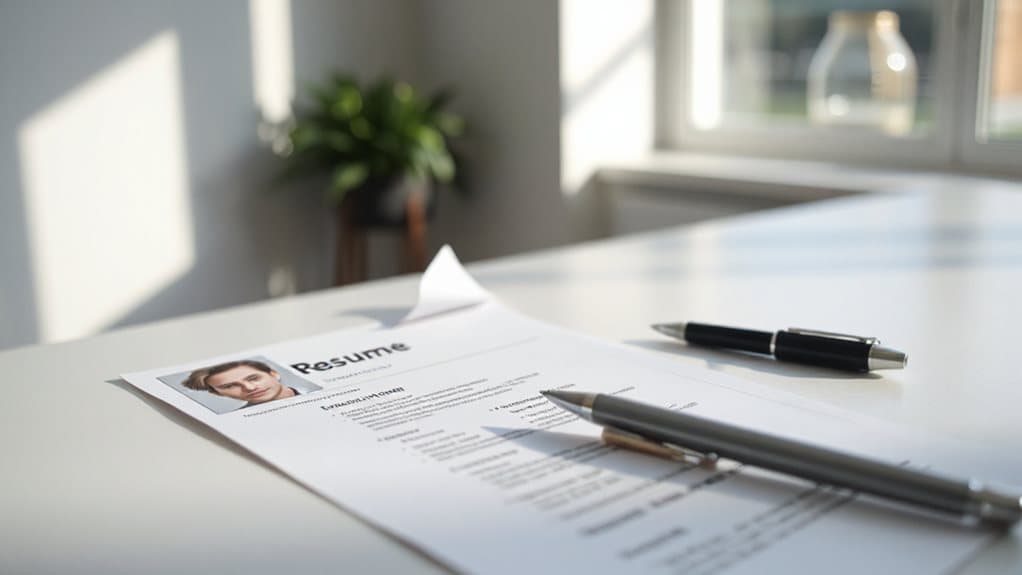
Why exactly are you considering adding that photo to your resume, and what do you think it will actually achieve?
You’re applying in a market where AI tools now screen most applications, and recruiters face overwhelming volumes they can’t individually review. With 95% of reviewed applications failing to meet listed criteria, hiring managers are under immense pressure to filter efficiently—meaning your photo becomes another unnecessary distraction rather than an asset. Strong communication skills are often a better use of resume space because they directly show how you work with others and adapt to change.
Your photo consumes precious space that could showcase skills serving others, while automated systems prioritize text content over visual elements that distract from your genuine qualifications.
The Legal Risk That Makes Photos a Liability for Employers
You’re probably wondering why Australian employers won’t even glance at a resume with your photo attached, and the answer lies in three serious legal risks they simply can’t afford to ignore.
When you include a picture, you’re forcing hiring managers into a minefield of anti-discrimination compliance, where even unconscious bias based on your age, race, or gender could expose the company to costly lawsuits and regulatory penalties.
Beyond that, your photo becomes a privacy liability the moment it enters their system, requiring strict consent protocols and secure handling under the Privacy Act 1988—complex obligations most employers would rather sidestep entirely by rejecting your application outright.
This is why many organisations adopt clear anti-discrimination policies to avoid legal exposure and ensure fair, merit-based hiring.
Anti-Discrimination Compliance
How exactly does attaching a photo to your resume put employers in legal hot water? When you include your image, you expose recruiters to discrimination claims under the Fair Work Act and anti-discrimination legislation, because your appearance reveals age, race, gender, and disability—protected attributes they can’t legally consider. You’re essentially inviting unconscious bias into a process that Australian law strictly regulates for fairness.
Unconscious Bias Prevention
Australian employers aren’t just worried about breaking anti-discrimination laws—they’re actively trying to stop bias before it starts, and your photo makes that job a lot harder. When you add a photo, you invite first impression bias and affinity bias that 98% of employers are working to eliminate.
Don’t you want your skills to speak louder than your appearance? By skipping the photo, you help hiring managers focus on what actually matters—your qualifications, not unconscious assumptions about who you are.
Legal Liability Exposure
Why risk becoming a legal headache for employers before you’ve even landed an interview? Your photo exposes them to serious liability under Australia’s anti-discrimination laws, including the Fair Work Act and state equal opportunity legislation.
By including an image, you force employers to navigate potential claims of race, gender, or age bias, with penalties reaching $66,600 per breach.
You’re essentially asking them to jeopardize their compliance records, insurance premiums, and reputation.
Remove the photo, and you help employers maintain merit-based, legally defensible hiring processes that protect everyone involved.
How Resume Photos Trigger ATS Penalties You Won’t See
When you’re uploading your resume to an online application, you probably don’t realize that a simple headshot could be triggering invisible penalties in the system before any human ever sees your qualifications.
ATS software reads text, not images, so your photo causes formatting errors and data loss that corrupt your entire application.
Many systems automatically reject image-containing files to protect computational resources meant for keyword matching, eliminating your candidacy without review.
You’re investing effort into helping others through your work, but a photo blocks that opportunity silently.
Why risk automatic rejection when your skills deserve proper evaluation?
Remove the image, ensure compatibility, and let your qualifications reach the people who need your service.
Recruiters typically spend only about seven seconds on an initial resume review, so removing photos helps ensure your keywords and skills are visible immediately.
Where Your Photo Actually Belongs: LinkedIn

You’ve learned why photos can hurt your resume, so where should your professional image actually live? LinkedIn gives you complete control over how employers see you, letting you build visibility through a polished headshot that follows clear technical rules—400×400 pixels, simple background, face filling 60% of frame—while your resume stays clean and ATS-friendly. By placing your photo on LinkedIn instead, you’re creating a cross-platform strategy where recruiters can find your face when they want to, not when software might reject you for it. Keep your profile concise and relevant, mirroring your resume’s clear, concise objective to strengthen your candidacy.
LinkedIn Visibility Advantage
How exactly should you use your professional photo where it’ll actually work in your favor? Upload it to LinkedIn, where recruiters actively search for candidates like you. A professional headshot earns you 21 times more profile views and 36 times more messages than going without. With 87% of Australian recruiters using LinkedIn as their primary tool, your visibility skyrockets when you complete your profile with a quality, recent photo.
Professional Image Placement
Where exactly should you put that polished headshot you’ve prepared? LinkedIn is your answer, not your resume. Upload a 400×400 pixel square image where your face fills 60-80% of the frame, cropped from your chest up against a plain background. Ensure your eyes are clearly visible with no harsh shadows, and you’re smiling directly at the camera.
Cross-Platform Strategy
Why limit your professional presence to a single document when LinkedIn offers a far better stage for your image? You can showcase your professional headshot there, following the platform’s specifications: 60-80% frame occupancy, simple background, and sharp focus. This approach lets you serve employers with a polished, accessible profile while keeping your resume clean and ATS-friendly. Isn’t that smarter?
What Recruiters Do When They Find Your Photo: and Why It Costs You
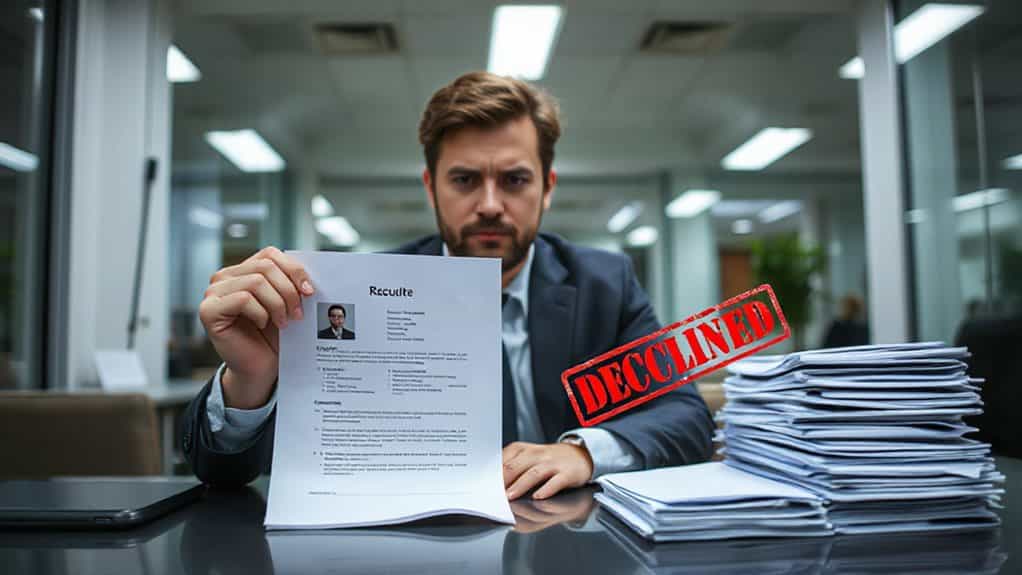
When you attach a photo to your resume, you’re handing recruiters a problem they didn’t ask for, and most will solve it by simply setting your application aside.
Recruiters at firms like Robert Half remove photos before forwarding resumes, while 99.98% of Australian roles reject them outright to avoid unconscious bias.
Your photo triggers ATS errors, wastes space for skills, and signals you’re relying on appearance rather than qualifications—so why risk losing the chance to serve others through your work?
Silence from hiring teams often reflects internal delays and process issues rather than a judgment about your suitability, so don’t assume rejection if your application stalls internal delays.
The 5 Industries Where Resume Photos Still Matter
How exactly do you know if your industry is one of the rare exceptions where a photo won’t hurt your chances?
If you’re pursuing acting, modelling, entertainment, or creative fields like graphic design, you’ll actually need that headshot.
These visual-driven sectors demand photos for casting, portfolios, and brand recognition, where your appearance serves the creative work you’re offering to others.
When a Specific Employer Requests Your Photo Anyway

If an employer explicitly asks for your photo despite the usual risks, you’ll need to take careful steps to protect yourself while complying with their request.
First, you should verify that the request is legitimate and job-related, perhaps by asking which inherent requirement of the position makes your appearance relevant.
Then, you’ll want to submit the photo separately from your resume rather than embedding it, keeping a clear paper trail of all communications in case discrimination concerns arise later.
Verify Request Legitimacy
Why exactly has this employer asked for your photo, and should you simply comply without question? You deserve clarity before sharing personal information. Ask how your appearance relates to the role’s core requirements, and check whether the position qualifies for Fair Work Act exemptions like acting or modelling. If the connection feels unclear or unjustified, you’re right to pause and protect yourself from potential discrimination.
Submit Separately
Where exactly should you send that photo when an employer insists they need one? You should submit it as a separate file, never embedded in your resume, since this protects your ATS compatibility and keeps your application professional. Name your file clearly, like “Jane_Smith_Headshot.jpg,” and confirm the preferred format, dimensions, and submission platform with your employer before sending.
Document Everything
How exactly do you protect yourself when an employer insists on seeing your photo, despite all the advice telling you to leave it off? You document everything, starting with the job description that explicitly requests your image. Save that posting, note the recruiter’s name, and keep records of any software you used to format your resume with the photo. Store versions with and without your image, so you’ve got clear evidence this wasn’t your choice, protecting you from potential bias claims while still serving the employer’s specific needs with professionalism and care.
How to Choose a Professional Headshot for Acting, Modeling, and Brand Roles

Although you might feel nervous about stepping in front of the camera, choosing the right professional headshot is one of the most important investments you’ll make for your acting, modeling, or brand career.
Review portfolios for professional lighting and model experience, confirm understanding of Australian agency preferences, and check reviews from fellow performers.
You’ll want 3-5 quality shots showing range—commercial smiles, dramatic intensity, and versatile characters—plus proper 6×8 inch resolution for print and web.
What to Prioritize on Your Resume Instead of a Photo
Your resume is your personal marketing document, and every centimetre of space needs to earn its place on the page.
Instead of a photo, prioritise a tailored professional summary that shows how you’ll serve employers through specific achievements.
Quantify your impact with numbers, list relevant skills like Salesforce or Power BI, and structure experience in reverse-chronological order.
Does your resume immediately demonstrate the value you bring to others?
How to Handle Applications When You’re Unsure About Photos
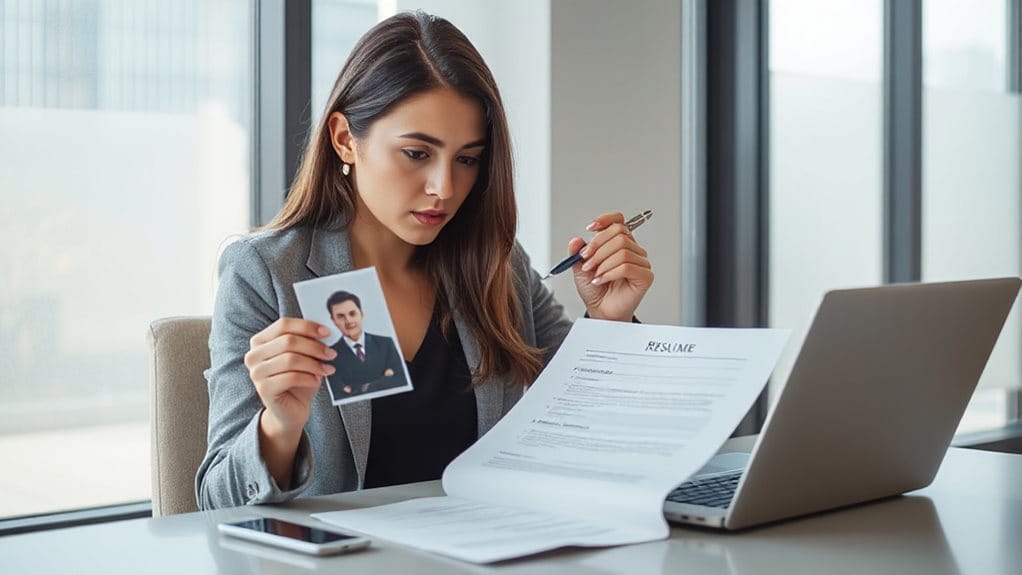
You’re staring at a job posting that doesn’t mention photos, and now you’re second-guessing every choice you’ve made so far. When uncertainty strikes, what should you actually do?
Skip the photo for multinationals following US or UK policies, and let your LinkedIn profile carry your professional image instead. Check if the agency removes photos automatically, or simply ask the recruiter directly—there’s no shame in clarifying expectations that protect your candidacy.
Your Photo-Free Resume: Final Verification Steps
Why risk your application over something you can easily fix? You scan your resume through free ATS simulators to catch hidden formatting errors, remove any image placeholders or embedded metadata, and confirm standard fonts keep your skills readable. You prioritize one-page clarity, knowing recruiters value your experience over appearance. Your careful verification protects opportunities, letting your qualifications serve employers without distraction.
And Finally
You’ve now got everything you need to build a photo-free resume that gets you noticed for the right reasons, so take a moment to review your final draft: does it showcase your skills, experience, and achievements without distraction? When you focus on what truly matters to Australian employers, you’re positioning yourself ahead of candidates who haven’t done their homework, aren’t you? Your qualifications deserve the spotlight, and now you’re ready to let them shine.

Emma Anderson is a professional executive resume and creative writer. She founded JobFrog Resumes in 2015 after leaving full-time work to raise her first child, combining her two passions: working from home with her family, and helping people put their best selves forward on paper. Emma has personally written every JobFrog resume since — no outsourcing, no templates — and stands behind the Jobfrog Rewrite Guarantee.