
You’re entering a job market where Australia desperately needs 32,000 electricians by 2030, 400,000 healthcare workers by 2050, and thousands of engineers, teachers, and cyber professionals right now. Employers in trades, clean energy, tech, and education are offering signing bonuses up to $36,500, higher regional salaries, and visa pathways leading to permanent residency in just two years. Which shortage occupation matches your skills, and what incentives could you claim?
TLDR
- Trades face critical shortages, needing 32,000–42,000 electricians by 2030.
- Engineering lacks 12,500 professionals for clean energy infrastructure projects.
- Cybersecurity gaps persist with 3,000–50,000 shortages projected through 2030.
- Healthcare and aged care require 400,000 workers by 2050 nationwide.
- Regional roles offer higher pay, signing bonuses, and permanent residency pathways.
Which Jobs Top Australia’s Skills Shortage List: and Who’s Hiring?

Where exactly should you look if you’re hoping to land a job in Australia right now? You’ll find electricians, plumbers, carpenters, and construction managers in desperate demand, with 32,000–42,000 more sparkies needed by 2030. Employers also rely on reference checks to verify candidates’ skills and suitability.
Engineers—mechanical, civil, electrical—are building tomorrow’s infrastructure.
Software developers, cybersecurity specialists, and teachers, especially in regional areas, urgently need your skills too.
Who’s hiring? Infrastructure firms, energy projects, tech companies, and schools nationwide. 29% of assessed occupations now face national shortage conditions, reflecting sustained demand across these critical sectors.
Healthcare and Aged Care: Australia’s Biggest Staffing Gap
Because Australia’s population is ageing rapidly, you’ll find healthcare and aged care sitting at the very top of the nation’s skills shortage list—and this isn’t a temporary blip you can wait out.
With 400,000 workers needed by 2050, your skills as a nurse or personal carer will change lives daily.
Will you answer this calling where compassion meets critical demand?
Employers increasingly value AI proficiency alongside adaptability, so gaining relevant digital skills can set you apart.
Teachers: Why Every State Still Can’t Fill Classrooms

If you’ve ever wondered why schools keep calling for relief teachers or why your local high school is advertising the same position for months, you’re seeing Australia’s teacher shortage in real time. You’d find 4,100 secondary teaching vacancies projected nationwide for 2025, with every state and territory struggling to fill classrooms.
Especially in regional and disadvantaged schools where staffing gaps reach 63-67%. This shortage is driven in part by difficulty finding qualified candidates across multiple sectors, making recruitment for schools increasingly challenging.
Trades Lead All Shortages: Electricians, Plumbers, and Carpenters in Demand
Although you mightn’t notice it when you flick a switch or turn on a tap, Australia is running dangerously low on the people who make those everyday comforts possible.
Electricians face the most severe pressure, with demand surging from renewable energy and infrastructure projects.
Plumbers and carpenters are equally critical, as housing targets strain an already stretched workforce.
Could you step into this essential gap?
Career breaks are increasingly accepted in Australia, and many returning workers use the time to gain updated qualifications that help them re-enter roles like these.
Engineers Powering Clean Energy and Infrastructure Projects

While Australia’s coal-fired power stations are steadily winding down, you’re living through one of the biggest engineering challenges this country has ever faced—replacing an entire energy system with clean, renewable alternatives.
You’ll find electrical, civil, and power systems engineers desperately needed across solar, wind, and transmission projects.
With 12,500 engineers short by 2026, could your skills help build this cleaner future?
AI is also creating 200,000 new jobs by 2030, offering additional opportunities in tech and support roles.
Cyber Security and Software Roles: Tech’s Most Critical Shortages
You’re stepping into one of Australia’s most urgent talent gaps when you consider cyber security and software roles, where the accelerating pace of cyberattacks and the slow growth of qualified professionals have created a perfect storm of opportunity.
With businesses across every sector scrambling to protect their digital assets, you’ll find that the shortage isn’t just about filling seats—it’s about finding people who can outthink increasingly sophisticated threats.
Rising Threat Landscape
If you’re looking for a career where your skills will be in constant demand, cybersecurity might be exactly what you need, because Australia’s digital infrastructure is facing threats that grow more sophisticated every single day.
With 70% of public agencies reporting critical shortages and businesses struggling to fill 58% of open positions, your competence could protect countless organizations from escalating attacks.
Talent Pipeline Gaps
How exactly does Australia plan to fill its most critical tech roles when the talent pipeline is leaking at every stage?
You’re facing a workforce where 137,000 cyber professionals still leaves 3,000 gaps by 2026, with some projections hitting 50,000 by 2030.
You see two in three organisations struggling with skills shortages, yet only 34% train non-security staff for cyber roles.
You watch women exit technical fields at alarming rates, with just 20% in highly technical positions, while employers hesitate to invest in entry-level candidates.
Regional Employers Pay More: Where Shortages Create Opportunity

If you’re willing to look beyond the big cities, you’ll find regional employers are increasingly offering higher salaries and signing bonuses to fill critical gaps in trades, healthcare, and construction—so where exactly can these incentives take your career, and how quickly could you move up the ladder when competition for promotion is lower?
The federal Key Apprentice Program now adds $10,000 for housing construction apprentices, while many regional employers stack additional bonuses on top of already improved wages.
With 21 occupations exclusively in shortage across regional Australia and vacancy rates running higher than in metropolitan areas, you’re looking at faster advancement, clearer pathways to permanent residency through visas like the 491 and 494, and the chance to build serious experience where your skills are genuinely needed.
Higher Regional Salaries
Although you might assume city jobs always pay more, regional Australia is quietly turning that assumption on its head, and you could be leaving serious money on the table if you haven’t looked beyond the capital cities.
In Very Remote Australia, your net income jumps 13.6% above major cities, while Remote areas offer 12.8% more.
Six of eight occupation groups—including Professionals, Technicians, and Community Service Workers—earn higher pay in these areas.
With 67,000 regional vacancies and persistent shortages, your bargaining power rises dramatically.
Employers compete fiercely for your skills, often implementing two-tier systems that reward your willingness to serve communities in need.
Incentive Payment Programs
When you consider relocating for better pay, you shouldn’t overlook the substantial financial incentives that regional employers can access just to bring you on board, because these programs effectively put more money in your pocket even before you negotiate your salary.
Federal wage subsidies reach $10,000 for hard-to-fill positions, while Queensland offers $15,000 for eligible hires.
Western Australia provides up to $36,500 for construction apprentices.
These incentives help employers invest in you.
Faster Career Advancement
Because you’re willing to look beyond the city limits, you’ll find that regional Australia isn’t just offering higher paychecks—it’s handing you a fast track up the career ladder that metropolitan workers often wait years to access.
In construction, healthcare, and education, you’ll step into leadership roles sooner as employers delegate duties to fill critical gaps.
You’ll gain broader experience across functions, building skills that strengthen your bargaining power for future moves.
Qualifications That Unlock Shortage Occupation Jobs
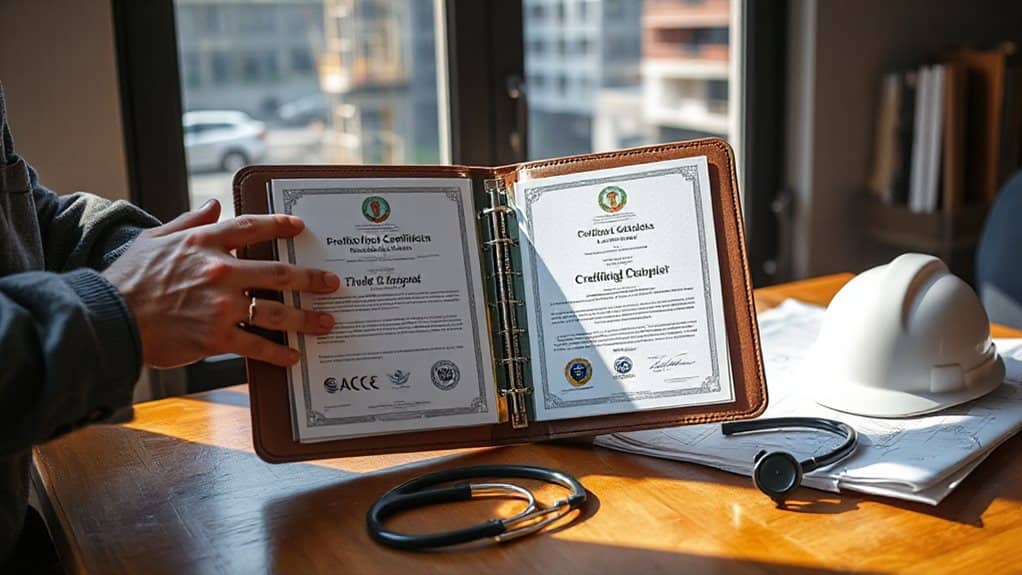
The right qualification can open doors to Australia’s most in-demand jobs, but do you know which pathway matches your career goals?
You can serve others through a degree in health or education, a diploma in construction management, or a trade certificate as an electrician or chef.
Each pathway builds practical skills that communities desperately need, so which qualification will you pursue to make your difference?
Visa and Sponsorship Pathways for In-Demand Workers
Once you’ve earned the right qualifications, you’ll need a clear route into Australia, and employer-sponsored visas offer exactly that pathway for skilled workers like you.
The Skills in Demand visa lets you work up to four years, and after two years, you can apply for permanent residency through the Employer Nomination Scheme.
Are you ready to start your trip?
And Finally
You’ve seen which industries desperately need your skills, from healthcare classrooms to construction sites and tech labs across Australia, so now you’re probably wondering what comes next, right? Whether you’re a tradesperson ready to relocate, a teacher seeking sponsorship, or an engineer eyeing clean energy projects, these shortages create genuine pathways for you. Start by matching your qualifications to visa requirements, reach out to regional employers offering premium wages, and take that first step toward building your career in a country that genuinely values what you bring.

Emma Anderson is a professional executive resume and creative writer. She founded JobFrog Resumes in 2015 after leaving full-time work to raise her first child, combining her two passions: working from home with her family, and helping people put their best selves forward on paper. Emma has personally written every JobFrog resume since — no outsourcing, no templates — and stands behind the Jobfrog Rewrite Guarantee.