
You’ll face several interviewers at once, so research each panelist’s background beforehand and tailor your responses to their departmental priorities. Prepare crisp STAR stories that highlight collaboration, problem-solving, and adaptability, then rehearse aloud until you sound natural and confident. Pack five resume copies, bring customized questions for each person, and dress professionally from head to toe even in virtual setups. Send personalized thank-you notes within 24 hours, referencing specific moments you shared, because Australian employers value candidates who demonstrate genuine attention to detail and authentic connection across multiple touchpoints—are you ready to discover exactly how to turn that panel dynamic into a real conversation?
TLDR
- Research every panelist’s background to tailor your STAR stories to their departmental priorities.
- Bring five crisp resume copies, customized questions for each panelist, and a polished reference list.
- Practice speaking to multiple people at once with natural flow and strong, confident eye contact.
- Demonstrate active listening by referencing earlier points and addressing each panelist by name.
- Send personalized thank-you notes within 24 hours referencing specific conversation moments with each interviewer.
Why Employers Use Panel Interviews (And What They’re Testing)
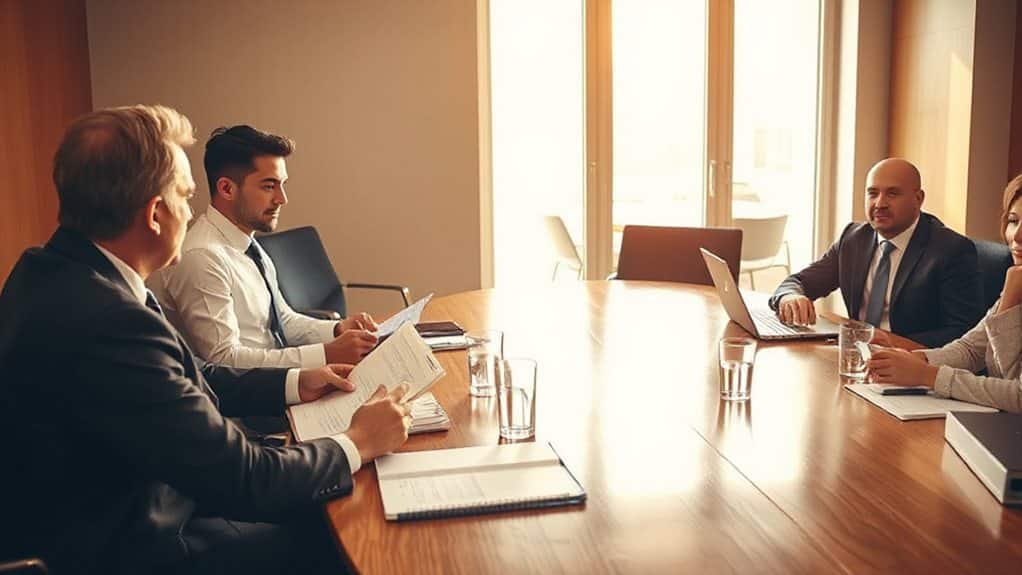
Why do so many Australian employers choose panel interviews over traditional one-on-one conversations? They’re seeking diverse perspectives on your skills, character, and values alignment while reducing individual bias.
You’ll face cross-functional teams testing your collaboration, problem-solving, and performance under pressure. Professional presentation during the interview also helps convey competence and attention to detail.
Multiple interviewers from different departments work together to evaluate your capabilities holistically.
This approach saves everyone’s time, accelerates hiring decisions, and ensures stakeholders share consistent information when evaluating your fit for complex, service-oriented roles.
Research Your Panelists Before You Rehearse a Word
Walking into a panel interview without knowing who’s sitting across from you is like stepping onto a stage with a blindfold—possible, but unnecessarily risky.
Research each panelist’s LinkedIn profile, noting their roles, shared connections, and recent publications. Review company bios, investigate their professional networks, and match their expertise to your skills.
You’ll craft responses that resonate, ask thoughtful questions, and demonstrate genuine respect for their time and experience. Many community support roles offer meaningful impact and don’t require advanced degrees, so highlight relevant on-the-job training when tailoring your examples.
Build STAR Stories That Connect to Each Panelist’s World
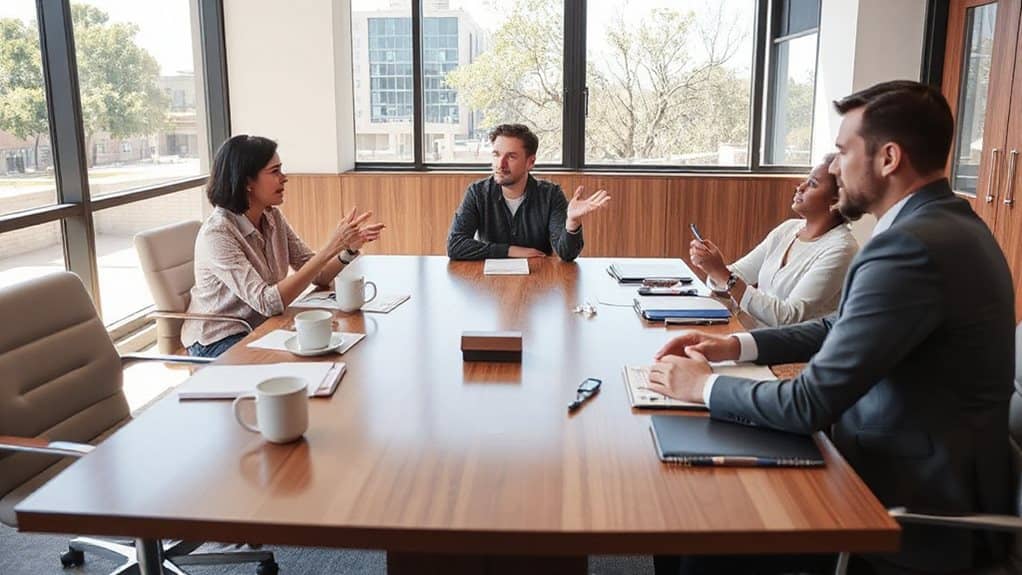
The art of storytelling converts scattered career moments into persuasive proof of your capabilities, and that’s exactly what you’re bringing to this panel interview.
You’ll craft STAR stories—Situation, Task, Action, Result—that resonate with each panelist’s priorities, connecting your leadership examples to their departmental goals.
Isn’t it powerful when your service-oriented achievements speak directly to what each interviewer values most?
Employers increasingly value AI proficiency alongside adaptability as you position those stories for roles in evolving workplaces.
Rehearse Your Delivery for Multiple Sets of Eyes
Because you’ve already built your STAR stories, you’re now ready to bring them to life through deliberate practice that prepares you for the unique pressure of speaking to several decision-makers at once.
You’ll rehearse aloud, varying between short and long versions, so your responses flow naturally without memorising every word.
Are you ready to transform your preparation into confident, conversational engagement that serves every panelist’s need to understand your value?
A strong closing should include a persuasive call to action and express gratitude to leave a polished, professional impression and encourage follow-up action.
Pack the Right Materials for Every Panel Member
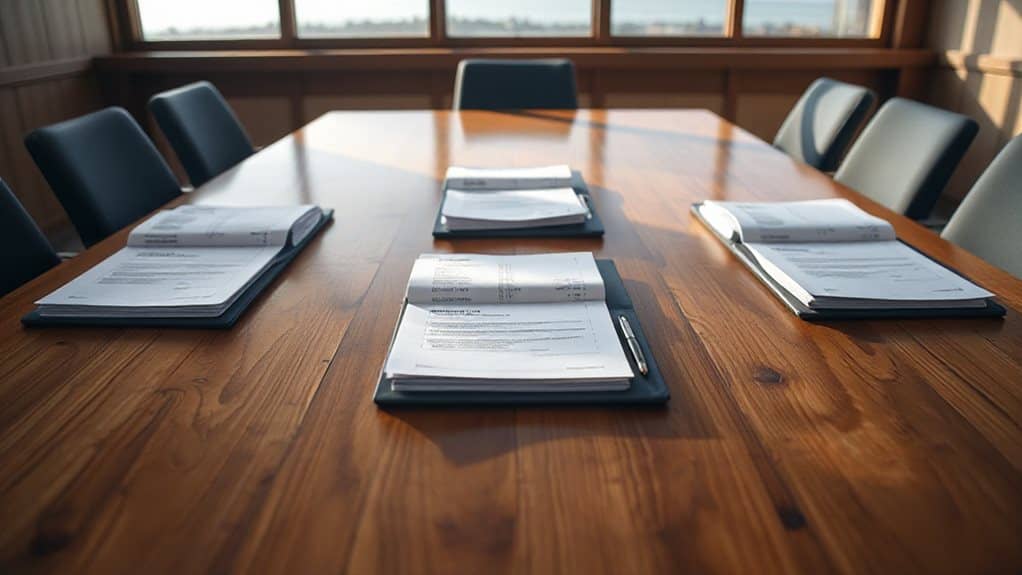
Often, the difference between a forgettable interview and a memorable one comes down to what’s sitting in your hands when you walk through that door. You’ll want five crisp resume copies, a reference list with two professional contacts, customized questions for each panelist, a notebook and pen, plus supporting documents like ID and portfolio. Aren’t you ready to show them you’re prepared? Interviewers are looking for candidates who demonstrate self-awareness and evidence of learning from past mistakes.
Open Strong and Control the Room’s Energy
You’ll make or break your panel interview in the first sixty seconds, so you need to walk in with your shoulders back, your breathing steady, and a genuine smile that reaches your eyes, even if your stomach’s doing flips.
When you shake every panelist’s hand, use their name, and speak at a measured pace without rushing, you’re already showing them you can handle pressure and connect with multiple stakeholders at once.
How will you reinvent those nerve-wracking opening moments into a confident, conversational exchange that sets the tone for everything that follows?
Master First Impressions
The moment you step through that interview door, you’ve already begun speaking before a single word leaves your mouth. Walk confidently, smile warmly, and greet each panelist with a firm handshake and steady eye contact.
Have you researched their backgrounds? This preparation shows respect. Breathe slowly, speak steadily, and let your genuine positivity create connection. Your authentic presence builds trust immediately, doesn’t it?
Command Body Language
How do you convert a room of strangers into engaged allies within seconds of sitting down? You start with inclusive eye contact, addressing the whole panel through triangulation while holding the camera’s gaze in video interviews.
Maintain open posture, angle your body toward the center, and mirror positive cues like leaning forward.
Use controlled, open-palm gestures below shoulder level, nod deliberately, and smile genuinely to build trust.
Set Positive Tone
Your body language has already started building trust before you’ve said a word, but the moment you speak sets the emotional temperature for everything that follows. You greet each panelist by name with genuine warmth, don’t you?
You breathe deeply, smile naturally, and evolve rigid Q&A into collaborative dialogue. You reference earlier points, expand answers to include everyone, and leave each person feeling valued, heard, and eager to champion your success.
Stay Composed During Rapid-Fire Follow-Up Questions
Why do panel interviews often feel like you’re facing a firing squad instead of a conversation? You’ll face forty questions in under an hour, so pare your answers back and stay direct.
Breathe through the stress, keep your demeanor neutral when interrupted, and ground each response in your key strengths.
Your calm, concise replies show you’re ready to serve under pressure.
Shift the Dynamic: From Interrogation to Conversation
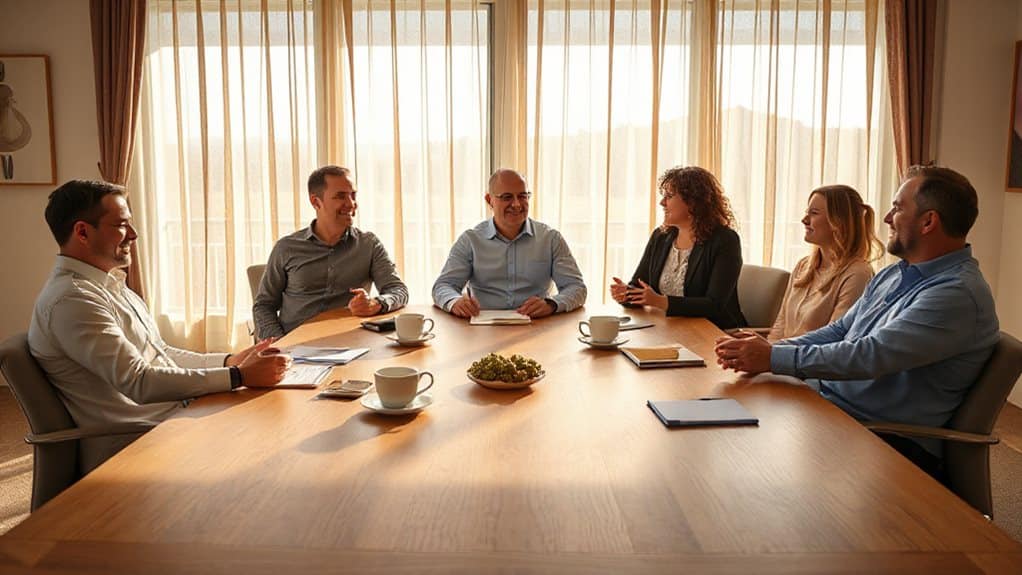
You can transform a stiff panel interview into a genuine conversation by weaving each panelist’s name naturally into your responses and deliberately referencing comments they made earlier in the session. When you turn to address Maria specifically and say, “Maria, your point about the team’s agile approach really resonates with what I saw in my research,” you signal that you’re listening actively and treating this as a dialogue rather than an exam.
Doesn’t this approach feel far more authentic than simply firing back answers to whoever happens to be holding the question sheet?
Use Names Naturally
How quickly can a stiff, one-sided panel interview morph into something that feels genuinely human? You’ll transform the room when you use names naturally, weaving “That’s a great point, Jordan” or “I really like what Priya mentioned” into your responses. Request interviewer names beforehand, jot phonetic spellings, and lay out business cards as visual guides. This simple act signals respect, builds rapid connection, and proves you’re truly listening to serve each panelist.
Reference Earlier Responses
When you’re sitting across from a panel of interviewers firing questions at you one after another, what converts that pressure-cooker atmosphere into something that actually feels like a real conversation? You weave connections. You reference Sarah’s earlier question about teamwork when Marcus asks about conflict resolution, saying, “Building on what Sarah mentioned earlier, that team project showed me how listening serves collaboration.” You glance at Sarah, then rotate to Marcus, creating dialogue between everyone. This demonstrates you’re actively listening, not just performing. You’re serving the panel’s shared goal: finding someone who truly fits.
Ace Your Virtual Panel Interview
Why let technical glitches derail your shot at a dream role when a little preparation can keep you in control? Test your internet speed beforehand, familiarize yourself with platforms like Zoom, and conduct a practice call to verify your setup. Position your computer on a stable desk, not your lap, and log in early to demonstrate reliability.
Choose a quiet space with minimal distractions, turn off notifications, and dress professionally from head to toe. When engaging the panel, maintain eye contact with your camera, pause after speaking to account for video lag, and address each panelist by name when possible. Take subtle notes if needed, but stay focused on building genuine connection through active listening and natural body language.
Send Follow-Ups That Panelists Actually Remember
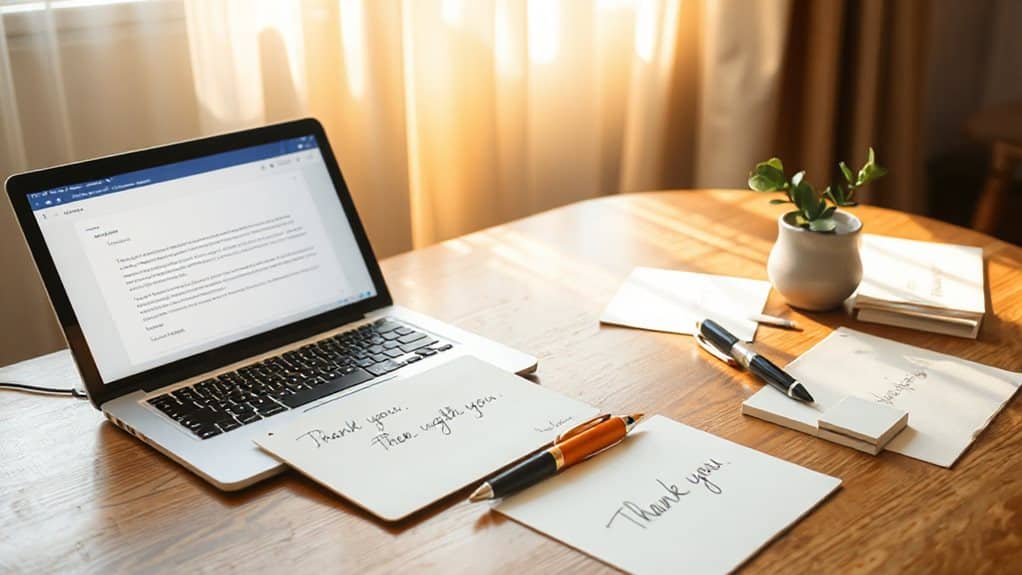
After your panel interview wraps up, you’ll want to craft thank-you notes that arrive within 24 hours yet still feel genuinely personal, referencing specific moments you shared with each interviewer rather than sending identical messages to everyone. Have you considered how a well-timed LinkedIn connection request, sent a few days later with a polite note about your conversation, can keep you visible without seeming pushy? By balancing promptness with thoughtful detail, you’ll create follow-ups that panelists actually remember when decision time comes around.
Timed Thank-You Notes
How soon should you reach out once that panel interview wraps up? You’ve got a 24-hour window to send that thank-you email, and acting fast shows you’re genuinely grateful and interested. The University of Sydney recommends this prompt approach because it keeps you fresh in every panelist’s mind. Don’t let delays steal your impact—your timely note helps you stand out when they’re deciding.
Personalised Connection Requests
Once you’ve sent that timely thank-you email, you’re probably wondering how to keep the momentum going with each panelist, and that’s where a personalised LinkedIn connection request becomes your secret weapon for staying memorable.
Reference your conversation, shared interests, or their recent posts—keep it under 300 characters, send Tuesday–Thursday mornings, and you’ll enhance acceptance from 15% to 45%.
And Finally
You’ve got the tools to turn that intimidating panel into your advantage, haven’t you? When you research thoroughly, craft targeted STAR stories, and shift the dynamic toward genuine conversation, you’re not just answering questions—you’re building connections that last. Whether you’re facing them in person or through a screen, your preparation and composure will set you apart. So take a breath, trust your groundwork, and walk in knowing you’ve already done the hard part. Ready to shine?

Emma Anderson is a professional executive resume and creative writer. She founded JobFrog Resumes in 2015 after leaving full-time work to raise her first child, combining her two passions: working from home with her family, and helping people put their best selves forward on paper. Emma has personally written every JobFrog resume since — no outsourcing, no templates — and stands behind the Jobfrog Rewrite Guarantee.