
You’ve got just 6 to 11 seconds to catch a recruiter’s eye, so make every detail count. They’ll scan the top third first, focusing on your summary, experience, and skills—place those prominently. Use bold headings, clear fonts, and white space to guide their gaze. Include job-specific keywords and measurable wins to pass automated filters and earn a deeper 94-second review. Want to know how to turn those seconds into real opportunity?
TLDR
- Recruiters spend just 6–11 seconds on an initial resume scan, focusing on the top third and left side first.
- Pass the quick scan by placing your name, title, and summary prominently at the top for immediate impact.
- Highlight relevant experience and measurable achievements early, as experience gets 38% of recruiter attention.
- Include 25–30 job-specific keywords, especially in your summary, to pass ATS filters and catch recruiter eyes.
- Use a clean, single-column layout with bold headings, bullet points, and white space to guide easy scanning.
How Long Do Recruiters Spend on Your Resume?

You’ve probably wondered just how closely recruiters examine your resume, and the truth is, they often make split-second decisions that determine your chances.
On average, they spend just 6 to 8 seconds initially, focusing on experience, skills, and layout. But if you pass that quick check, you could get over a minute of their time—so make every second count. Are you standing out fast enough? Resumes that quantify achievements and mirror job-description keywords tend to pass ATS checks and earn longer reviews.
One study found that resumes with metric-based achievements held attention longer, increasing the odds of a deeper review.
Recruiters Spend 6–11 Seconds on First Scan
You’ve got just 6 to 11 seconds to make a strong first impression, so every second counts when a recruiter scans your resume.
They’ll likely focus on your experience, summary, and skills right away, following a pattern that reveals what stands out most.
Are you placing your best information where it’s most likely to be seen and remembered?
Research shows recruiters often scan the top third of the page first, so place your strongest points in that prime real estate to improve visibility.
First Impressions Matter Most
While it might feel like your resume has plenty of time to make an impact, the truth is that recruiters often decide whether you’re a fit within just a few seconds—typically between 6 and 11 seconds during their first scan.
You’re not just sharing experience, you’re offering value to a team in need. Make your skills clear, your achievements visible, and your purpose evident.
Isn’t that what service is about?
Scan Patterns Reveal Priorities
Often, the way you structure your resume shapes how quickly a recruiter sees your value. You’re guiding their eyes in just 6–11 seconds, so make it easy.
They’ll scan in an E- or F-pattern, focusing on your name, experience, and skills. Use clear headings, bold titles, and bullet points.
Is your layout simple, with obvious hierarchy? Good—because clutter hides your impact.
What Recruiters Look at First (And Why)
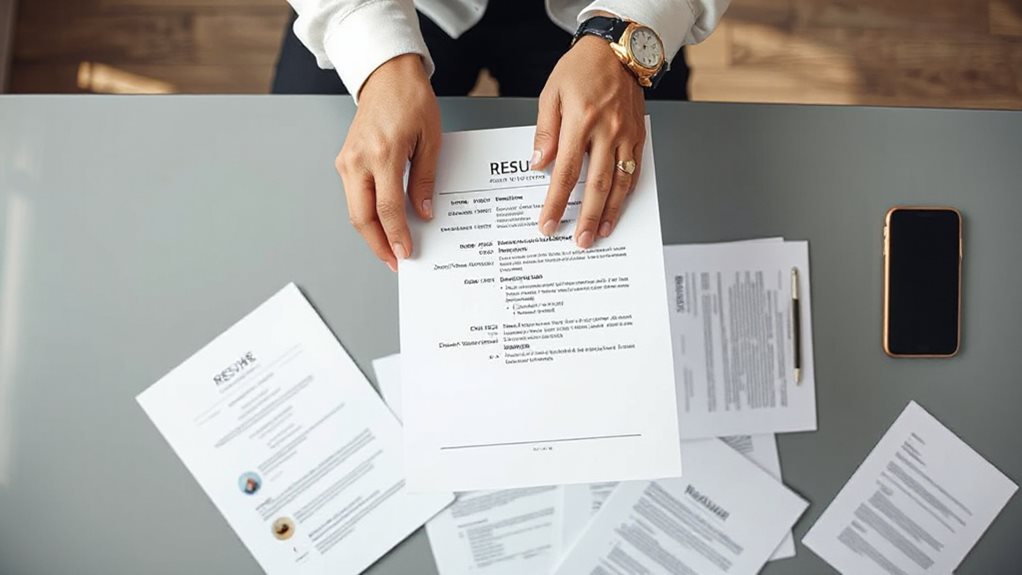
Right away, recruiters zero in on your headline and summary because those sections give them the fastest sense of who you’re and whether you’re a fit for the role.
You want your headline clear, keyword-rich, and aligned with the job—why? Because it guides their eyes, builds trust quickly, and enhances your chances of being seen as the helping hand the team needs. Recent hiring best practices emphasize focusing on the most relevant 10–15 years of experience to showcase current skills and achievements.
Focus on Experience: Where 38% of Attention Goes
You spend most of your resume real estate on experience for a reason—recruiters spend 38% of their time right there, scanning your past roles for a quick fit. Make it easy for them by clearly highlighting relevant job titles and key achievements, especially those that match the position you’re after.
Have you shown measurable results in a clean, single-column format? That’s what keeps their eyes on your story. Consider adding a concise professional summary that showcases your current role, years of experience and top achievements to give recruiters immediate context and measurable impact.
Experience Section Priority
When recruiters scan your resume, they’re not just skimming—they’re searching for proof you can deliver results, and that’s why your work experience section grabs nearly 38% of their attention.
You show your ability to serve others by highlighting real impact, not just duties. Did you save time, lead teams, or enhance performance? Use numbers, action verbs, and clear wins to show how you’ve made a difference.
Highlight Relevant Job Roles
Your resume’s experience section isn’t just a timeline—it’s the spotlight where recruiters spend over a third of their time, drawn to it more than any other part of your application.
You need clear, bold job titles so they instantly see your fit.
Are your roles easy to scan? Use simple formatting, bullet points, and match titles to the job description.
Show growth, add metrics, and keep layout clean—this keeps eyes on your impact, not distractions.
Write a Summary Recruiters Get in 3 Seconds

Catching a recruiter’s attention starts the moment your resume lands in their inbox, and you’ve got just seconds to make it count.
You know they’ll spend only 7–11 seconds scanning—so your summary must be clear, bold, and fast to grasp.
Use strong keywords, a simple layout, and highlight how you serve teams or solve problems.
Can you show value right away? You should.
Including around 25–30 targeted keywords throughout your summary and resume helps you pass ATS filters and surface to recruiters 25–30 keywords.
Showcase Skills to Pass the 18% Gaze Test
You’ve got about 18% of a recruiter’s glance—roughly 2 seconds—for them to spot your skills, so place them near the top in a clear, scannable section with bold headings and bullet points.
Match the exact keywords from the job description to enhance your chances of getting 19% more attention and passing both human and AI screenings.
Ask yourself: are your most important skills easy to find, clearly named, and backed by results?
Strategic Skills Placement
While recruiters only spend about six to eight seconds scanning your resume, that brief window is long enough to make or break your chances—if you know how to use it to your advantage. Place your skills near the top, right after your summary, so they’re seen immediately.
Could you risk hiding your strengths further down? Organize them clearly, use strategic terms like “strategic planning,” and align with the job’s needs. You’re not just listing skills—you’re guiding the reader to see your value fast, which helps you stand out and serve your goal: landing the interview.
Keyword Optimization Tactics
How do you make sure your resume doesn’t vanish into the digital void before a human even sees it? You strategically place keywords recruiters and ATS systems search for.
Study job posts, mirror top professionals’ language, and use tools like Jobscan.
Front-load your summary with core terms, weave keywords into achievements, and include synonyms.
Keep formatting clean, update terms every few weeks, and aim for natural, meaningful integration that highlights your impact.
Keep Education Brief: It Gets Just 11% of Focus

You’ll often find that recruiters spend just a fraction of their time reviewing your education section—about 11% of their focus, to be precise—so it’s essential to make those few seconds count.
Have you included your degree, school, and graduation date clearly? Are honors or relevant coursework listed only if they strengthen your fit? Keep it concise, especially if you’re experienced, and let your skills and service-driven achievements take center stage where they matter most.
Use a Clean Layout That Wins in 7 Seconds
Often, the difference between landing an interview and getting passed over comes down to just seven seconds—can your resume make the right impression that fast?
You can, by using clean margins, simple fonts, and clear headings. White space guides the eye, while bullet points highlight achievements.
A minimalist, one-column layout guarantees both recruiters and ATS systems read your resume easily—making your impact clear, fast.
Avoid Tiny Fonts, Dense Text, and Multi-Column Layouts
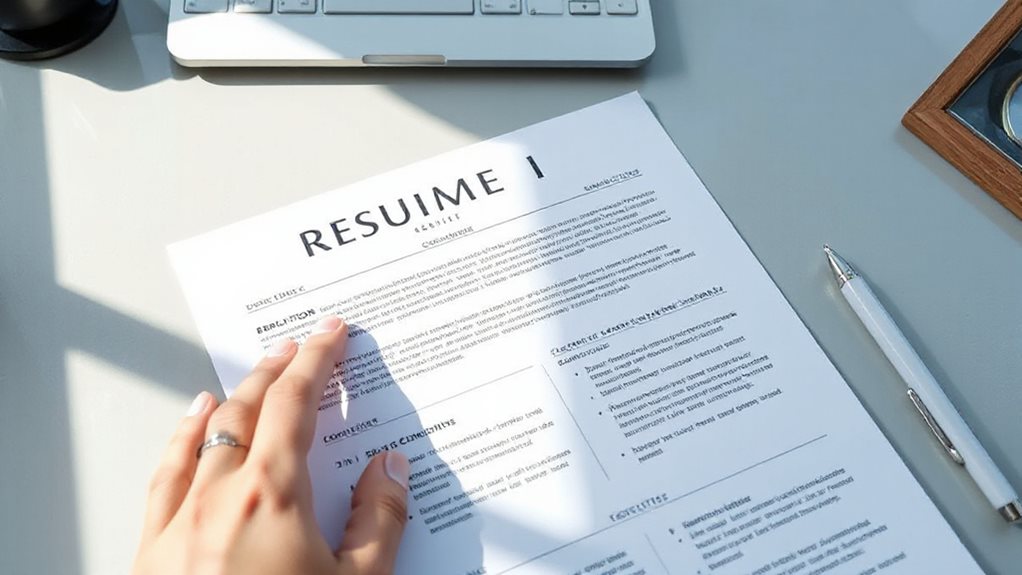
While you might be tempted to shrink your font or cram more content into every inch of space, doing so could cost you the very opportunity you’re trying to earn.
You should use 10-12 point fonts like Calibri or Arial, avoid dense text, and skip multi-column layouts—why risk being overlooked?
Clear spacing, readable fonts, and simple formatting help recruiters see your strengths quickly, showing you respect their time and value clear communication.
Design for the Way Recruiters Actually Scan
Because recruiters scan resumes in a predictable F-pattern—starting at the top and moving down the left side—you’ll want to place your most important information where it’s most likely to be seen.
You know how essential first impressions are, right? Position your summary, experience, and skills prominently along the left margin.
Use bold headings, bullet points, and white space to guide the eye naturally.
You’re not just sharing your story—you’re making it easy for recruiters to see your value quickly, which helps them help you.
Beat the 80% Rejection Rate With One Change

You’ve optimized your resume’s layout so recruiters can scan it in seconds, guiding their eyes to your strengths with smart use of spacing and alignment—but what if most hiring managers never see it at all?
The truth is, 75% of resumes get rejected by automated systems before any human reads them. You can beat this 80% rejection rate with one change: tailor your keywords to match the job description exactly.
When you align your skills and experience with the role’s language, you’re not just seen—you’re understood, valued, and far more likely to move forward.
Prepare for the Full 94-Second Review
Even though that first glance lasts just a few seconds, what happens after you pass the initial scan matters just as much—because once you’ve caught a recruiter’s attention, you’ve earned the chance to make a deeper impression during the full 94-second review.
You’ll want to guide their eyes with clear sections, bold headings, and bullet points that highlight impact. Are your accomplishments easy to find? Can they quickly see how you’ve helped others succeed? Structure your resume so every second counts, turning interest into opportunity.
And Finally
You now know recruiters spend just seconds scanning your resume, focusing first on your experience and summary. Make those moments count by keeping your layout clean, your text readable, and your key details easy to find. A simple, well-organized format helps you beat the 80% rejection rate. So, ask yourself: does your resume guide the eye in under 10 seconds? If yes, you’re ready for the deeper 94-second review—and one step closer to the interview.